Embark in Knowledge.
Engineer South Africa's
STEM future.
EIK is the South African vehicle channelling Hasso Plattner Foundation funding into measurable STEM outcomes — delivered through Inkcubeko Youth and Science Centre in Thembalethu, George, with a Cape Town Discovery Lab to follow in 2027.
We channel international capital. Into measurable South African STEM outcomes.
EIK is a South African non-profit organisation funded by the Hasso Plattner Foundation. Our role in the impact ecosystem is precise: we are the institutional, donor-facing vehicle that translates international funding into structured, measurable STEM programmes — and we deliver those programmes through Inkcubeko Youth and Science Centre in Thembalethu, George, with a Cape Town Discovery Lab to follow in 2027.
Most South African development organisations try to wear two hats — institutional credibility for funders, community warmth for beneficiaries — and end up wearing both badly. We split the work. EIK does governance, partnership, evidence. Inkcubeko delivers the Saturday classes. The two brands look related because they are. They behave differently because they should.
Learners reached, 2024 — 2026
0
Across both centres, audited against attendance and progression data.
+38% vs 2024
Girls in STEM-track programmes
0%
Nine percentage points above the South African national STEM enrolment average.
Above benchmark
Programme spend, 2024 — 2026
R0m
Ring-fenced from operations. 91% deployed to direct learner-facing delivery.
91% direct
Where the work happens
Two centres. One pipeline.
Our delivery is centre-based, not virtual. The Western Cape was a deliberate choice — it lets us anchor in a high-need community (Thembalethu) while staying close to a research and methodology partner (the d-school Afrika at UCT).
Inkcubeko Youth and Science Centre
Thembalethu, George · Western Cape
Our delivery partner since 2019. A community-rooted STEM centre running curriculum support, robotics, the DisChem Adolescent Clinic, and a SAASTA-aligned exhibition hall. Inkcubeko runs the work; we run the audit trail.
Learners
2,047
Programmes
11
Partner since
2019
Cape Town Discovery Lab
Site selection in progress · Cape Metro
The second centre, in design with the d-school Afrika at UCT and the Western Cape Education Department. Modelled on the HPI d-school project-partnership format: design challenges run with student teams from UCT against problems set by SA municipalities and CSI partners.
Capacity Y1
800+
Partners
3
Opening
Q3 2027
Method & lineage
Design thinking, Afrikan context.
Our programme architecture borrows from the HPI d-school in Potsdam and the Hasso Plattner d-school Afrika at the University of Cape Town. The method is human-centred, iterative, and evidence-led. We adapt it for two specific constraints South African STEM funding tends to ignore: the learner’s first language is rarely English, and the closest research library is rarely in their town.
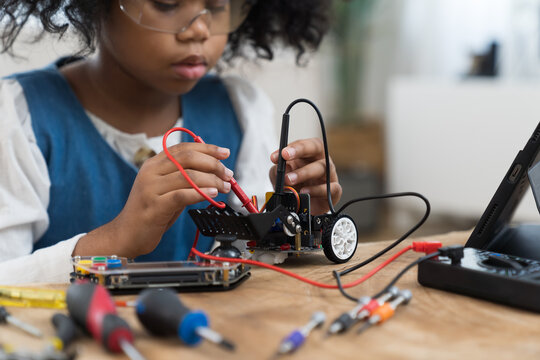
What that looks like in a Saturday class: we start with a problem the learner can name in their own language, prototype with materials they can hold, and measure what changed in their reasoning — not what they can recall in a quiz.
METHOD PARTNER
Hasso Plattner d-school Afrika
University of Cape Town · Faculty exchange and method partnership active since 2025.
The programme cycle
i.
Empathise
Start with the learner's framing of the problem — in isiXhosa, Afrikaans or English.
ii.
Define
Frame the design challenge against curriculum outcomes and centre capacity.
iii.
Ideate & prototype
Build with materials on hand. Test against peers, not abstract rubrics.
iv.
Measure & publish
Pre / post reasoning gain, attendance, progression. Quarterly, including what didn't work.
Why girls in STEM
The gap between, enrolment and persistence is the work.
Girls who enter STEM-track programmes in South Africa drop out at 1.6 times the rate of boys before reaching matric. Closing that gap takes more than recruitment posters; it takes role models, family-engagement programmes, and curriculum that doesn’t quietly route girls out of physical sciences in Grade 9.
We measure persistence, not enrolment. Our 54 percent representation figure is the survivor — the cohort still in the programme after the third quarter. That is the number we are willing to be quoted on.
We do not need more girls signing up. We need more girls staying.
Partners
The names that made this possible.
We list our partners by the work, not by the size of the cheque. The Hasso Plattner Foundation is our anchor funder. Everything else flows around that core.
Anchor Funder · 2026 — 2030
Hasso Plattner Foundation
The Hasso Plattner Foundation funds the digital leaders of tomorrow — through the Hasso Plattner Institute in Potsdam, the d-school Afrika at UCT, and from 2026, EIK in South Africa. Our work is part of that pipeline. The funding is committed, multi-year, and tied to specific STEM-outcome milestones.
Programme
Science + Education
Geography
Western Cape, ZA
Cycle
2026 — 2030
HASSO PLATTNER
FOUNDATION
PROJECT REF · ZA-EIK-2026-001
Academic & delivery
Hasso Plattner d-school Afrika
Method & faculty exchange
SINCE · 2025
Inkcubeko Youth & Science Centre
Pillar 2 delivery partner
SINCE · 2019
Living Maths
Curriculum partnership
SINCE · 2022
Cape Town Science Centre
Programme cross-flow
SINCE · 2024
Government
Western Cape Education Dept
School pathway access
SINCE · 2020
Department of Science and Innovation
Science centre alignment
SINCE · 2022
SAASTA
Science centre network
REGISTERING · Q3 2026
George Municipality
Centre infrastructure
SINCE · 2019
Corporate & CSI
DisChem Foundation
Adolescent Clinic, Thembalethu
SINCE · 2021
Open for partnership
B-BBEE Level 1 · Section 18A
CSI CYCLE · 2027
Open for partnership
Lab equipment & bursary
CSI CYCLE · 2027
Open for partnership
Cape Town Discovery Lab
CSI CYCLE · 2027
Academic & delivery
Partner with the work
Choose the path that fits your governance constraints. All three are POPIA-compliant, audited, and Section-18A-receipted.